
In our early childhood programs, parents are the third leg of a three-legged stool—the children, the teachers, and the parents. When all three are in balance, so is the stool. The stool can be a metaphor for your classroom, your early childhood program, or your entire organization. Parents are a key component in each.
To the director of the program, there is nothing more important than meeting the needs of the three and getting this stool balanced. If one leg is slightly off, the stool topples. I think you can imagine what then happens!
So, we work, especially at the beginning, to build that relationship between the three—the children, the teachers, and the parents—for it is the foundation for everything that will happen in our childcare world.
This is reflected in our vision.
We respect parents as the most important people in their child’s life and we work in partnership with them in order to meet the child’s individual needs.
In Beginning to End: the Life Cycle of a Childcare Center, I have added in detail what we believe, that parents should:
- feel welcome arriving, visiting, observing,
- have confidence and trust in the program,
- be informed about the program, and their child’s daily experience,
- know that their child receives personal, individualized care,
- feel free to ask questions of staff,
- know that the program is sensitive to their concerns,
- have an opportunity to contribute to the classroom environment or curriculum,
- feel good about themselves as parents, and
- have their expert knowledge of their own child respected.
When a new child comes into our program, it is a “packaged deal.” With one comes the other—the child and the parent.
I envision the child with parent on their first day at our front door, both with a tag hanging from their clothing, much like Paddington Bear. And interestingly, it is the same note for both. It reads: “Please look after me. Thank you.”
And both, the child and the parent, do need looking after, and taking care of.
This is all new to them—going to a childcare center, leaving one another. They are both anxious and looking for reassurance. And sometimes we forget this. Our training prepared us to help children. We focus on the child and assume the parents are fine. Our training must prepare us to support the parents as well. Because just under the surface lies their biggest worry, their biggest concern, their biggest fear—unspoken, not asked, but very much there.
What parents are really asking in all their many questions, and what parents really want to know is, “Do you know, and do you love and care about my special child?”
And, we do!
If there is but one skill (and all of its nuances) that we must master to work effectively and enjoyably with parents, it is communication. And by that, I mean all-encompassing communication—speaking, writing, body language, and listening. Great skill with people is required for the job!
In Beginning to End: The Life Cycle of a Childcare Center, I share how to go about building solid, lasting relationships with parents. I had a very successful (and long) career in early education, and I am pleased to share the best of what I learned. My last childcare center had nearly 400 parents each year!! As a result, I learned a lot and, happily, I pass it on to you. Enjoy the read.
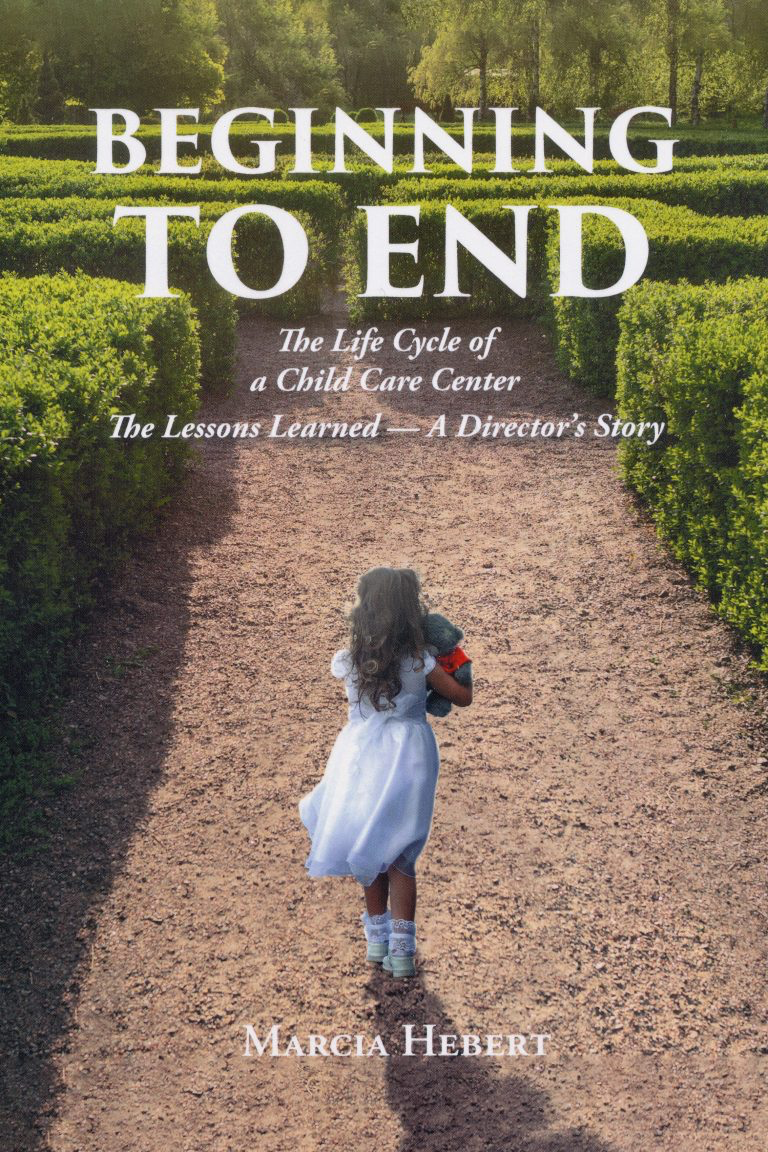
For more tips, techniques, and how-tos that worked for me, take a look at Beginning to End: The Life Cycle of a Child Care Center—A Director’s Story, at amazon.com books.
